
Intestinal Worms in Dogs: Types, Symptoms, and Prevention
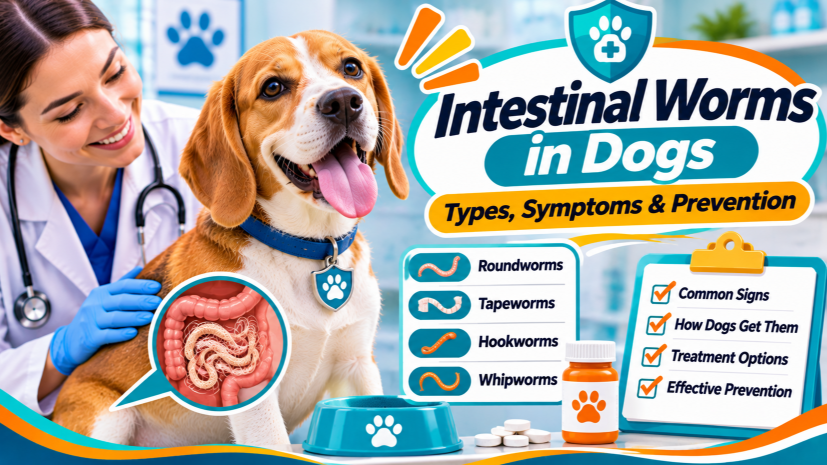
Intestinal worms are a common health concern in dogs, affecting puppies and adult pets in different ways. Some infected dogs show noticeable digestive problems, while others may carry parasites without displaying obvious symptoms.
These parasites live inside the digestive system and can interfere with nutrient absorption, damage intestinal tissues, and cause other health complications. Certain species can also pose health risks to people, making proper prevention important for the entire household.
The good news is that intestinal parasite infections can often be identified through veterinary testing and managed with appropriate treatment.
In this guide, we will explore the most common types of intestinal worms in dogs, their symptoms, how infections develop, and practical ways to protect your pet.
1. What Are Intestinal Worms in Dogs?
Intestinal worms are parasites that live inside a dog's digestive tract. They obtain nutrients from their host and reproduce through different life cycles, depending on the parasite species.
Dogs can become infected by swallowing parasite eggs, consuming contaminated food or soil, eating infected animals, or coming into contact with contaminated environments.
Some puppies can also acquire certain parasites from their mothers before birth or during nursing.
An important challenge is that an infected dog may appear completely healthy. This is why routine fecal examinations and veterinarian-guided parasite prevention are valuable parts of responsible pet care.
The Merck Veterinary Manual's guide to gastrointestinal parasites in dogs explains the different parasite species, their transmission routes, and the health problems they can cause.
2. The Most Common Types of Intestinal Worms
Several types of worms can affect dogs. Understanding their differences helps owners recognize possible warning signs.
Roundworms
Roundworms are among the most frequently identified intestinal parasites in dogs, particularly puppies.
They can spread through contaminated environments, infected animals, and transmission from mother to puppies.
Possible signs include a swollen abdomen, diarrhea, poor growth, and occasionally visible worms in vomit or feces.
Hookworms
Hookworms attach to the intestinal lining and feed on blood.
They can cause intestinal irritation and blood loss, potentially leading to anemia, weakness, and digestive problems.
Puppies and dogs with heavy infections may experience more serious complications.
Tapeworms
Tapeworms are segmented parasites that live in the digestive tract.
Dogs commonly acquire certain tapeworm infections by swallowing infected fleas during grooming or through consuming infected prey animals.
Owners may sometimes notice small segments resembling grains of rice around the dog's anus or in its feces.
Whipworms
Whipworms live primarily in the large intestine.
Dogs become infected by swallowing microscopic eggs from contaminated soil or other environments.
Possible symptoms include intermittent diarrhea, weight loss, mucus or blood in the stool, and reduced appetite.
3. Common Symptoms of Intestinal Worms
Symptoms vary according to the parasite species, the severity of infection, and the dog's overall health.
Some infections produce few noticeable signs, while others can cause significant digestive problems.
Watch for the following changes:
- Diarrhea or unusually soft stools.
- Vomiting.
- Unexplained weight loss.
- A swollen or rounded abdomen.
- Changes in appetite.
- Poor growth in puppies.
- Visible worm segments in feces.
- Weakness or unusual tiredness.
- Pale gums, which can indicate anemia.
Not every dog with these symptoms has intestinal worms. Other medical conditions can produce similar changes.
If your dog develops persistent digestive problems, unexplained weight loss, or unusual weakness, arrange a veterinary examination.
4. How Do Dogs Get Intestinal Worms?
Understanding transmission is essential for preventing reinfection.
Dogs can encounter intestinal parasites through several everyday activities.
Contaminated soil: Some parasite eggs and larvae can survive in outdoor environments. Dogs may become infected while sniffing, licking, or eating contaminated material.
Infected fleas: Certain tapeworm species are transmitted when dogs accidentally swallow infected fleas.
Infected animals: Eating rodents, wildlife, or other infected prey can expose dogs to certain parasites.
Contact with contaminated feces: Some intestinal parasites spread through microscopic eggs or larvae present in infected animal waste.
Mother-to-puppy transmission: Certain roundworms and hookworms can pass from mother dogs to their puppies.
The Cornell University College of Veterinary Medicine's roundworm guide provides additional information about transmission and prevention.
5. How Are Intestinal Worms Diagnosed?
A veterinary examination is the best way to determine whether your dog has intestinal parasites.
One of the most common diagnostic methods is a fecal examination.
During this procedure, a stool sample is examined for parasite eggs or other evidence of infection.
Depending on the suspected parasite, veterinarians may recommend:
- Fecal flotation testing.
- Centrifugation-based fecal examinations.
- Parasite antigen testing.
- Specialized PCR testing.
- Additional blood tests when complications are suspected.
Some parasites do not consistently release detectable eggs into the feces. Consequently, a single negative test does not always exclude infection.
Your veterinarian may recommend additional samples or alternative diagnostic methods when symptoms and test results do not agree.
6. Treatment Options for Intestinal Worms
Treatment depends on the parasite species, the dog's age, its health, and the severity of infection.
Veterinarians may prescribe antiparasitic medications known as anthelmintics.
Different medications target different parasites, so there is no single treatment suitable for every intestinal worm.
Some infections require repeated treatment or follow-up examinations to confirm that the parasites have been controlled.
Dogs experiencing complications such as dehydration or anemia may also need additional veterinary support.
Never administer human medication, leftover dewormers, or products intended for another animal without veterinary guidance.
Following the prescribed treatment plan is important because reinfection can occur when contaminated environments remain untreated.
7. How to Prevent Intestinal Worm Infections
Preventive care can significantly reduce the likelihood of intestinal parasite infections.
Consider incorporating these practices into your dog's regular routine:
Remove feces promptly: Clean your dog's waste from the yard and during walks to reduce environmental contamination.
Maintain regular veterinary examinations: Discuss appropriate fecal testing and parasite prevention schedules.
Control fleas: Effective flea prevention can reduce the risk of certain tapeworm infections.
Discourage scavenging: Prevent your dog from eating rodents, wildlife, or unidentified animal remains.
Maintain clean surroundings: Wash bedding, clean food and water bowls, and keep outdoor resting areas hygienic.
Practice good hand hygiene: Wash your hands after handling animal waste or cleaning contaminated areas.
The Companion Animal Parasite Council (CAPC) recommends veterinarian-guided parasite testing and preventive programs adjusted to an animal's age, lifestyle, and exposure risks.
8. Can Intestinal Worms Affect Humans?
Yes. Certain intestinal parasites found in dogs can also affect people.
Roundworms and some hookworms have zoonotic potential, meaning they can be transmitted from animals to humans through environmental exposure.
People generally become exposed through contact with contaminated soil or other environments containing infectious parasite stages.
Children may face additional exposure risks when playing in areas where animal waste has not been removed.
To reduce household risks:
- Wash hands after handling dogs or cleaning waste.
- Remove dog feces promptly.
- Wear footwear outdoors.
- Keep children's play areas clean.
- Follow veterinary parasite prevention recommendations.
These simple habits help protect both pets and their families.
9. Frequently Asked Questions About Intestinal Worms in Dogs
Can dogs have worms without showing symptoms?
Yes. Some intestinal parasite infections produce few or no visible symptoms, making routine fecal testing important.
How often should dogs be tested for intestinal parasites?
Testing frequency depends on age, health, lifestyle, and exposure. Puppies generally need more frequent examinations than healthy adult dogs. Your veterinarian can establish an appropriate schedule.
Can indoor dogs get intestinal worms?
Yes. Indoor dogs can become infected through contaminated objects, fleas, other animals, and environmental exposure.
Can I identify worms by looking at my dog's stool?
Sometimes. Tapeworm segments or adult roundworms may be visible, but many parasite eggs and larvae cannot be seen without laboratory examination.
Are intestinal worms dangerous for puppies?
They can be. Heavy infections may interfere with growth and cause anemia, digestive problems, and other complications. Puppies should receive appropriate veterinary preventive care.
Conclusion
Intestinal worms are a common but important health concern for dogs. Roundworms, hookworms, tapeworms, and whipworms can cause different problems, ranging from mild digestive changes to more serious complications.
Understanding how these parasites spread, recognizing potential symptoms, and maintaining regular veterinary examinations can help protect your pet.
Remember that effective parasite prevention should be based on your dog's individual needs and local exposure risks. Work with your veterinarian to establish an appropriate testing and treatment plan.
With consistent hygiene, responsible pet care, and timely veterinary attention, you can help your dog stay healthier and reduce the risk of intestinal parasite infections.
Deja un comentario