
Flea and Tick Prevention for Dogs: Safe and Effective Protection
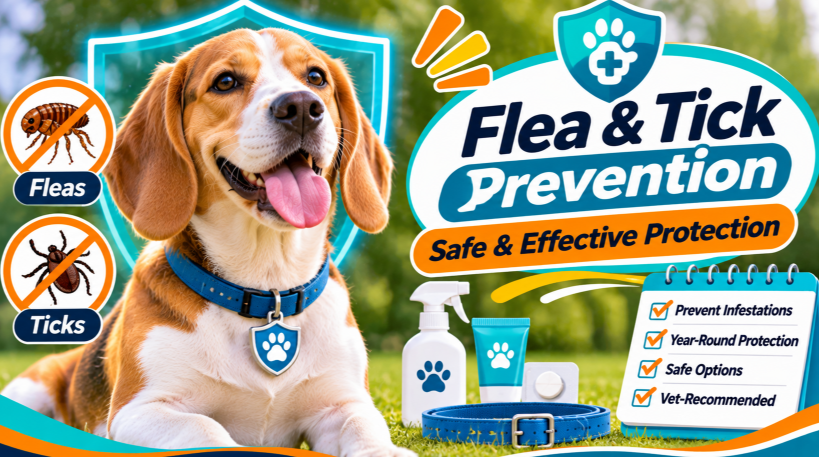
Fleas and ticks are among the most common external parasites that affect dogs. These tiny pests can cause more than occasional itching. They may irritate the skin, trigger allergic reactions, and transmit diseases that affect your dog's overall health.
Whether your dog spends most of its time indoors or enjoys exploring gardens, parks, and outdoor spaces, parasite prevention should be part of its regular healthcare routine.
The good news is that several preventive measures can help reduce the risk of infestations. Understanding how fleas and ticks behave, recognizing early warning signs, and choosing appropriate veterinary-approved protection can make a significant difference.
In this guide, we will explain how to identify these parasites, prevent infestations, maintain a cleaner environment, and protect your dog throughout the year.
1. Understanding Fleas and Ticks in Dogs
Although fleas and ticks are both external parasites, they have different characteristics.
Fleas are small, wingless insects that move quickly through an animal's coat. They feed on blood and reproduce rapidly. Their eggs can fall into carpets, bedding, furniture, and other areas where pets spend time.
Ticks are small arachnids that attach to an animal's skin and feed on blood. Depending on the species and life stage, they can be difficult to notice, particularly on dogs with thick or dark coats.
Both parasites can affect dogs of different ages and breeds.
The FDA's guide to flea and tick products explains the potential health problems associated with these parasites and the importance of selecting appropriate preventive products.
2. Signs Your Dog May Have Fleas
Fleas can be difficult to detect because they move quickly and hide within the dog's coat.
However, certain changes may suggest an infestation.
Common signs include:
- Frequent scratching or biting at the skin.
- Excessive licking, especially around the back and tail.
- Small dark particles in the fur, sometimes called flea dirt.
- Skin irritation or redness.
- Hair loss in areas affected by repeated scratching.
- Restlessness and discomfort.
Some dogs develop flea allergy dermatitis, an allergic reaction to proteins in flea saliva. Even a relatively small number of flea bites can cause significant itching in sensitive animals.
If your dog develops persistent itching, skin irritation, or hair loss, arrange a veterinary examination to identify the cause.
3. How to Recognize Ticks on Your Dog
Ticks attach to the skin and may remain unnoticed until they become more visible.
Regular inspections are particularly important after outdoor activities.
Pay attention to areas such as:
- Inside and around the ears.
- Around the eyes.
- Under the collar.
- Between the toes.
- Under the front legs.
- Around the tail.
- Between the back legs.
Run your fingers gently through your dog's coat while checking for small bumps or unusual attachments.
The CDC guide to preventing ticks on pets recommends checking pets daily, especially after they spend time outdoors.
If you discover an attached tick, remove it promptly using an appropriate tick-removal method or ask your veterinarian for assistance. Avoid crushing it with your fingers.
4. Choosing the Right Flea and Tick Prevention
There are several types of products designed to protect dogs against fleas and ticks.
Common options include:
Oral preventives: These products are administered by mouth and are designed to provide parasite protection for a specified period.
Topical treatments: Applied to the skin according to the product instructions, these treatments may help control external parasites.
Preventive collars: Certain collars release active ingredients that provide protection against specific parasites over a designated period.
Specialized shampoos: Some products help manage existing external parasite problems, although they should not automatically be considered a replacement for ongoing prevention.
Not every product protects against every parasite.
The appropriate choice depends on your dog's age, weight, health, lifestyle, and the parasites present in your area.
The American Veterinary Medical Association (AVMA) recommends discussing preventive options with a veterinarian before choosing a product.
Always follow the product label and never combine treatments without professional guidance.
5. Why Consistent Prevention Matters
Flea and tick exposure does not always disappear when temperatures change.
In warm environments, fleas may remain active throughout the year. Ticks can also be present in different seasons depending on the species and local conditions.
For this reason, many veterinary parasite-control programs recommend continuous protection.
Consistency helps reduce the possibility of infestations becoming established in your home.
However, the ideal prevention schedule should be determined by your veterinarian using local parasite risks and your dog's individual circumstances.
Missing applications or delaying preventive treatment may leave periods when your dog is less protected.
6. Keeping Your Home Free From Fleas and Ticks
Protecting your dog also involves maintaining its surroundings.
Flea eggs and immature stages can develop in the environment, making established infestations difficult to control.
Consider these household practices:
- Wash your dog's bedding regularly.
- Vacuum carpets and upholstered furniture.
- Clean areas where your dog frequently rests.
- Keep outdoor resting spaces clean.
- Remove accumulated leaves and unnecessary yard debris.
- Inspect other household pets regularly.
If several pets live together, ask your veterinarian about an appropriate parasite-control plan for each animal.
Never assume that a product designed for dogs is automatically safe for cats. Some ingredients can be particularly dangerous to other species.
For established infestations, professional pest-control advice may be necessary.
7. Important Safety Precautions When Using Preventive Products
Flea and tick products contain active ingredients that must be used correctly.
Before applying or administering any treatment, check the product information carefully.
Pay particular attention to:
Age restrictions: Some products are unsuitable for very young puppies.
Weight requirements: Products are formulated for specific weight ranges. Using an inappropriate formulation can expose your dog to unnecessary risks.
Health conditions: Sick, pregnant, nursing, elderly, or medicated dogs may require additional veterinary consideration.
Product compatibility: Combining different preventive products without professional guidance may increase the risk of unwanted reactions.
Species restrictions: Never use a dog-only product on a cat.
After starting a new treatment, monitor your dog for unusual behavior or signs of a reaction. Contact your veterinarian promptly if you notice vomiting, weakness, excessive drooling, unusual movements, or other concerning symptoms.
8. When Should You Contact a Veterinarian?
Some parasite problems require more than routine prevention.
Contact your veterinarian if your dog experiences:
- Persistent scratching or skin inflammation.
- Significant hair loss.
- Visible wounds caused by irritation.
- A large number of fleas or ticks.
- Unusual tiredness or weakness.
- Changes in appetite or behavior after a tick bite.
- Signs of illness following parasite treatment.
Ticks can transmit infectious diseases, and symptoms may not appear immediately after exposure.
A veterinarian can assess your dog's condition and recommend appropriate examinations or treatment.
Regular preventive examinations also provide an opportunity to review parasite protection. Learn more in our Dog Wellness Exams guide.
9. Frequently Asked Questions About Flea and Tick Prevention
Can indoor dogs get fleas?
Yes. Fleas can enter homes through other animals, people, and contaminated environments. Indoor dogs are not completely protected from exposure.
Should flea and tick prevention be used throughout the year?
In many environments, continuous prevention is recommended. Your veterinarian can determine the appropriate schedule based on local parasite activity.
Can I use the same treatment for fleas and ticks?
Some products protect against both, while others target only specific parasites. Always check the product label and consult your veterinarian.
Are natural flea and tick remedies always safe?
No. Natural ingredients can still cause irritation or toxicity. Do not apply essential oils or homemade mixtures without veterinary guidance.
Can fleas and ticks affect people?
Yes. Fleas can bite people, and ticks can transmit infections to humans. Keeping pets protected also helps reduce parasite exposure around the household.
Conclusion
Flea and tick prevention is an important part of maintaining your dog's health and comfort. These parasites can cause skin problems, trigger allergic reactions, and expose pets to infectious diseases.
Regular coat inspections, appropriate veterinary-approved prevention, and good household hygiene can help reduce the risk of infestations.
Remember that every dog has different needs. Work with your veterinarian to choose suitable protection based on your pet's age, health, lifestyle, and local parasite risks.
Consistent prevention and early attention to unusual symptoms can help your dog remain healthier, more comfortable, and better protected throughout the year.
Deja un comentario