
Grain-Free Dog Food: Benefits, Risks, and What Owners Should Know
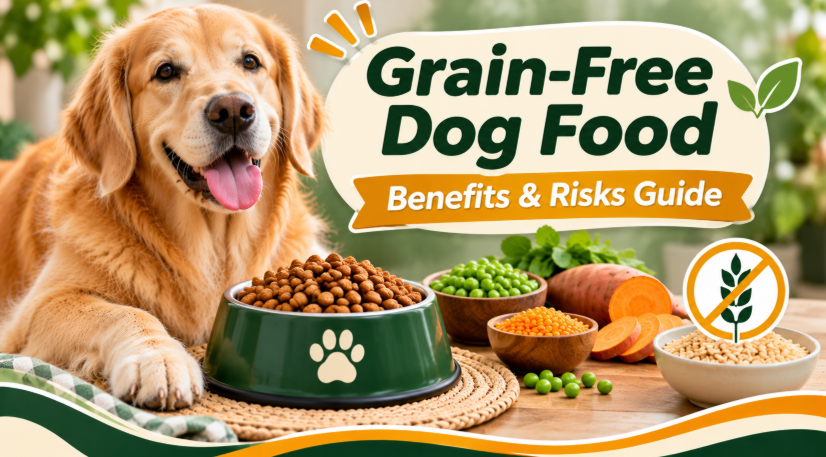
Grain-free dog food has become a popular choice among pet owners looking for different ways to feed their dogs. Walk through a pet store, and you will find products advertised as grain-free, natural, or made with alternative carbohydrate sources such as peas, lentils, and sweet potatoes.
But does removing grains actually make dog food healthier?
The answer is not as simple as many advertisements suggest. Some dogs may benefit from specific dietary adjustments, but grain-free food is not automatically better than traditional dog food. In fact, certain grain-free formulas have raised nutritional questions that every dog owner should understand.
In this guide, we will explain what grain-free food contains, its potential advantages, possible concerns, and how to decide whether this type of diet is appropriate for your dog.
1. What Does Grain-Free Dog Food Mean?
Grain-free dog food is formulated without traditional cereal grains.
Common grains excluded from these formulas include:
- Corn.
- Wheat.
- Rice.
- Barley.
- Oats.
- Sorghum.
Instead of these ingredients, manufacturers often use alternative carbohydrate sources, including:
- Potatoes.
- Sweet potatoes.
- Peas.
- Lentils.
- Chickpeas.
- Tapioca.
These ingredients can provide carbohydrates, fiber, and other nutrients.
It is important to understand that grain-free does not mean carbohydrate-free. Most grain-free commercial foods still contain carbohydrate sources; they simply come from different ingredients.
2. Are There Benefits to Grain-Free Dog Food?
Grain-free diets may have a role in certain individual feeding situations, but their benefits should not be exaggerated.
Alternative Ingredient Options
Some dogs require specific dietary adjustments because of diagnosed food allergies or other sensitivities.
In these cases, a veterinarian may recommend a diet that excludes a particular ingredient.
However, eliminating all grains is not necessarily required. The appropriate approach depends on identifying the ingredient responsible for the reaction.
Different Food Formulations
Grain-free products offer alternative ingredient combinations for owners comparing commercial dog foods.
Some dogs may tolerate a particular formulation better than another, although this does not establish that grain-free diets are generally superior.
Individual Dietary Requirements
Veterinarians sometimes recommend specialized diets when a dog has particular nutritional or medical needs.
The important distinction is that a diet should be selected according to the dog's health requirements rather than marketing claims.
According to Tufts University's veterinary nutrition experts, there is no reliable evidence that feeding grains is inherently harmful to dogs.
3. Are Grains Bad for Dogs?
No. Properly processed grains can provide useful nutrients as part of a complete and balanced diet.
Depending on the ingredient, grains can contribute:
- Dietary fiber.
- Carbohydrates for energy.
- Vitamins and minerals.
- Essential fatty acids.
- Plant-based protein.
Ingredients such as rice, oats, and corn can be included in appropriately formulated dog foods.
Another common misconception is that dogs cannot digest grains. Dogs can digest properly processed grains, and these ingredients can be valuable components of their diets.
Removing grains does not automatically improve nutritional quality.
4. Understanding Food Allergies and Grain Sensitivities
Some dogs experience adverse reactions to particular foods.
These reactions may involve skin problems, digestive discomfort, or other symptoms.
However, food allergies should not be confused with ordinary digestive sensitivities.
A dog can react to a specific ingredient without needing to avoid every grain.
Food allergies in dogs can involve different dietary proteins, and identifying the responsible ingredient generally requires veterinary evaluation.
When a food allergy is suspected, veterinarians may recommend a carefully controlled elimination diet followed by an appropriate dietary challenge.
Avoid changing multiple ingredients at once without professional guidance, as this can make it harder to identify the cause of the problem.
5. Grain-Free Dog Food and Heart Health: What Owners Should Know
One of the most important concerns surrounding certain grain-free dog foods involves a heart condition called dilated cardiomyopathy (DCM).
DCM is a disease in which the heart muscle becomes weakened and enlarged, potentially affecting its ability to pump blood effectively.
The U.S. Food and Drug Administration (FDA) began investigating reports of DCM in dogs eating certain diets, many of which were labeled grain-free.
Some reported foods contained substantial amounts of peas, lentils, other legumes, or potatoes among their main ingredients.
However, there is an important distinction: the FDA has not established that grain-free food itself causes DCM.
The investigation has not identified a definitive cause, and reports have involved both grain-free and grain-containing diets.
The FDA also notes that legumes are not inherently dangerous ingredients.
You can read the agency's latest questions and answers about its DCM investigation.
The FDA's published position is that owners should discuss dietary decisions with their veterinarians rather than making sudden changes based on headlines or marketing claims.
6. How to Choose a Grain-Free Dog Food Responsibly
If your veterinarian recommends a grain-free formula, evaluate the product carefully.
Here are several important considerations:
Check nutritional adequacy: Look for a complete and balanced food appropriate for your dog's life stage.
Understand the ingredients: Review the main ingredients, including peas, lentils, potatoes, and alternative carbohydrate sources.
Research the manufacturer: Look for companies that employ qualified animal nutritionists and have appropriate quality-control procedures.
Consider calorie content: Compare the energy provided by different formulas and measure daily portions appropriately.
Discuss individual health needs: Dogs with medical conditions may require specific dietary recommendations.
The WSAVA Global Nutrition Toolkit offers useful guidance for evaluating pet food manufacturers and nutritional information.
7. Common Mistakes When Choosing Grain-Free Food
Some common mistakes can lead owners to select products for the wrong reasons.
Avoid these assumptions:
- Grain-free automatically means healthier.
- All grains cause allergies.
- Grain-free means carbohydrate-free.
- More expensive food is always better.
- Alternative ingredients guarantee better digestion.
- Every dog benefits from avoiding grains.
Instead, focus on nutritional adequacy, reliable manufacturing, and your dog's individual requirements.
You can also read our guide to homemade dog food to understand why ingredient selection and nutritional balance matter when planning a dog's diet.
Frequently Asked Questions About Grain-Free Dog Food
Is grain-free dog food better for all dogs?
No. Most dogs can eat properly formulated diets containing grains. Grain-free food is not automatically healthier or more nutritious.
Can dogs digest grains?
Yes. Dogs can digest properly processed grains, which can provide energy, fiber, and other nutrients.
Can grain-free food cause heart problems?
A definitive causal relationship has not been established. The FDA has investigated reports of DCM associated with certain diets, many of which contained substantial amounts of legumes or potatoes.
Should I switch my dog to grain-free food?
Do not switch simply because a product is advertised as grain-free. Discuss your dog's nutritional needs with a veterinarian before making significant dietary changes.
Do dogs with allergies need grain-free food?
Not necessarily. A dog may react to a particular ingredient without being allergic to all grains. Veterinary evaluation can help identify the actual dietary trigger.
Conclusion
Grain-free dog food is an alternative feeding option, but it is not automatically healthier than traditional food containing grains.
While certain dogs may benefit from individualized dietary adjustments, grains can provide valuable nutrients as part of a balanced diet.
Owners should also understand the ongoing scientific questions surrounding certain grain-free formulations and canine heart health.
Rather than choosing food based on advertising or ingredient trends, prioritize complete nutrition, reliable manufacturers, and your dog's individual needs.
When in doubt, consult your veterinarian before changing your dog's regular diet. A carefully selected food is much more important than whether its packaging says grain-free.
Deja un comentario