
Puppy Nutrition: Essential Nutrients for Healthy Growth
Bringing a puppy home is an exciting experience, but it also comes with important responsibilities. One of the most important is providing the right nutrition during the early stages of life.
Puppies grow quickly, and their nutritional needs are different from those of adult dogs. They require an appropriate balance of protein, fats, vitamins, minerals, and calories to support healthy development.
Choosing the right food and establishing consistent feeding habits can make a big difference during this important stage.
In this guide, we will explore the essential nutrients puppies need, how often they should eat, and what to consider when selecting food for healthy growth.
1. Why Is Puppy Nutrition Different From Adult Dog Nutrition?
Puppies experience rapid physical development during their first months. Their bones, muscles, organs, and immune systems are still developing.
Because of these changes, they need food specifically formulated for growth.
Puppy food generally provides a different balance of calories, protein, fats, vitamins, and minerals compared with adult maintenance food.
According to the Merck Veterinary Manual, growth diets are designed to provide the nutrients puppies need in appropriate amounts and proportions.
Feeding an adult maintenance formula to a growing puppy may not provide the nutritional balance required during development.
2. Essential Nutrients Puppies Need
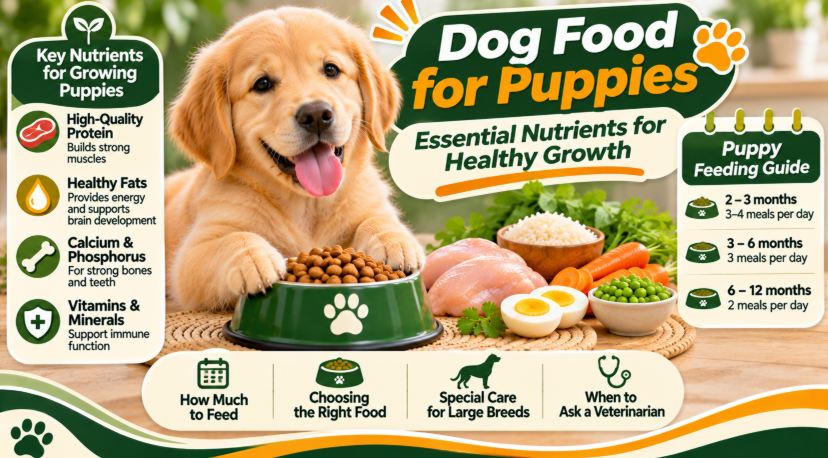
A complete puppy diet contains several important nutrients that support different aspects of development.
Protein for Muscle Development
Protein supplies amino acids that help build and maintain muscles, repair tissues, and support normal body functions.
Quality protein ingredients may include chicken, beef, turkey, fish, and eggs.
The important factor is providing sufficient digestible protein with the essential amino acids puppies need.
Healthy Fats for Energy
Fats provide concentrated energy and help the body absorb fat-soluble vitamins.
Certain fatty acids, including DHA, an omega-3 fatty acid, are particularly important during early development because they support normal brain and eye development.
Calcium and Phosphorus for Strong Bones
Calcium and phosphorus are essential minerals involved in bone and tooth development.
However, the balance between these minerals matters just as much as their individual amounts.
Giving additional calcium supplements to a puppy already eating a complete and balanced growth diet is generally unnecessary and may be harmful, particularly for large-breed puppies.
Vitamins and Other Minerals
Puppies also need appropriate amounts of vitamins and minerals, including:
- Vitamin A for normal vision and immune function.
- Vitamin D for calcium regulation and bone development.
- Vitamin E for antioxidant protection.
- Zinc for skin health and normal development.
- Iron for healthy red blood cell production.
A properly formulated puppy food should provide these nutrients in appropriate amounts.
3. How to Choose the Right Puppy Food
With so many products available, choosing puppy food can feel overwhelming.
Start by checking the nutritional adequacy statement on the packaging.
Look for food labeled as complete and balanced for growth or for all life stages, with the appropriate provisions for your puppy's expected adult size.
Consider these factors:
Age: Choose food specifically formulated for growing puppies.
Expected adult size: Large-breed puppies have different nutritional considerations from smaller dogs.
Ingredient quality: Evaluate the complete formula rather than choosing food based on one ingredient.
Manufacturer information: Look for companies that employ qualified animal nutritionists and maintain appropriate quality-control procedures.
For additional guidance, read our guide to understanding dog food labels.
4. Special Nutritional Needs of Large-Breed Puppies
Large- and giant-breed puppies require particular attention during growth.
Their bones and joints develop over a longer period, and excessive energy intake or inappropriate mineral levels can contribute to developmental problems.
For this reason, choose a complete and balanced food specifically formulated for large-breed puppy growth when appropriate.
Important considerations include:
- Controlled calorie intake.
- Appropriate calcium levels.
- Proper calcium-to-phosphorus balance.
- Consistent weight monitoring.
- Avoiding unnecessary supplements.
Feeding more food does not necessarily produce healthier growth. A steady, appropriate growth rate is preferable to encouraging rapid weight gain.
5. How Often Should You Feed a Puppy?
Puppies generally need more frequent meals than adult dogs because they have smaller stomachs and substantial energy requirements.
A general feeding schedule is:
| Puppy age | Daily meals |
|---|---|
| 2–3 months | 3–4 meals |
| 3–6 months | Around 3 meals |
| 6–12 months | Around 2 meals |
These are general guidelines, not strict rules. Smaller puppies may need more frequent meals, and individual requirements vary.
As your puppy grows, feeding frequency can gradually decrease.
Fresh drinking water should always be available.
6. Understanding Puppy Food Portions
One of the most common feeding mistakes is giving puppies too much food.
Although growing dogs need adequate calories, excessive feeding can encourage unhealthy weight gain and place unnecessary stress on developing joints.
Start with the feeding recommendations printed on the food package.
Then consider:
- Your puppy's current weight.
- Age and expected adult size.
- Activity level.
- Body condition.
- Veterinary recommendations.
Measure meals consistently rather than estimating portions by eye.
Regular veterinary visits and weight monitoring help determine whether feeding amounts need adjustment.
7. When Should Puppies Switch to Adult Dog Food?
The transition depends on breed size and individual development.
Small and medium-sized dogs often reach skeletal maturity earlier than large and giant breeds.
As a general guide:
- Small breeds may transition around 9–12 months.
- Medium breeds commonly transition around 12 months.
- Large breeds may need puppy food until approximately 15–18 months.
- Giant breeds may require growth diets until 18–24 months.
These timeframes vary, so ask your veterinarian when your puppy is ready.
When changing foods, introduce the new formula gradually over approximately 7–10 days to help avoid digestive upset.
8. Common Puppy Feeding Mistakes
Even caring owners can make nutritional mistakes without realizing it.
Avoid these common problems:
- Feeding adult maintenance food too early.
- Giving excessive treats between meals.
- Adding calcium supplements without veterinary advice.
- Overfeeding to encourage faster growth.
- Changing food suddenly.
- Ignoring the nutritional needs of large breeds.
- Feeding homemade meals without professional formulation.
Remember that treats should not replace a significant portion of a puppy's complete daily diet.
For more information about protein selection, see our guide to the best protein sources for dogs.
Frequently Asked Questions About Puppy Nutrition
What is the best food for growing puppies?
Choose a complete and balanced food specifically formulated for growth and appropriate for your puppy's expected adult size.
Do puppies need more protein than adult dogs?
Growing puppies have different nutritional requirements, including requirements for protein and other nutrients that support development.
Can puppies eat adult dog food?
Adult maintenance food is generally not appropriate as the main diet for growing puppies because it may not provide the required nutritional balance.
Should I give my puppy calcium supplements?
Not unless your veterinarian specifically recommends them. Complete growth diets already provide appropriate mineral levels when fed as directed.
When should I stop feeding puppy food?
The timing depends on your dog's breed size and skeletal maturity. Small dogs generally mature earlier than large and giant breeds.
Conclusion
Proper puppy nutrition provides the foundation for healthy development. Protein, fats, calcium, phosphorus, vitamins, and minerals all contribute to important processes during growth.
Choosing a complete and balanced puppy food, measuring portions carefully, and establishing consistent feeding habits can help support your puppy throughout this stage.
Remember that every puppy develops differently. Pay attention to growth, monitor weight, and work with your veterinarian to ensure that your companion receives the nutrition needed for a healthy start in life.
Deja un comentario