
Wet vs. Dry Dog Food: Which Is Better for Your Pet?
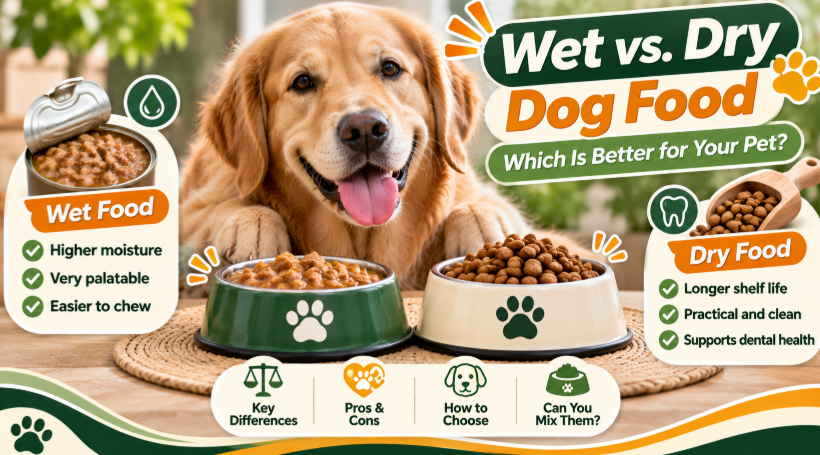
Choosing between wet and dry dog food is a common question among pet owners. Walk through any pet store, and you will find shelves filled with kibble, canned meals, food pouches, and different textures designed to suit various preferences.
Both wet and dry food can provide the nutrients dogs need when they are properly formulated. However, they differ in moisture content, convenience, storage, texture, and price.
So, is one really better than the other? The answer depends on your dog's individual needs, eating habits, and lifestyle.
In this guide, we will compare both options, explain their advantages and disadvantages, and help you understand how to choose an appropriate feeding routine.
1. What Is the Difference Between Wet and Dry Dog Food?
The biggest difference between wet and dry dog food is their moisture content and physical texture.
Dry dog food, commonly called kibble, contains relatively little water. Wet food is packaged with considerably more moisture, usually in cans, trays, or sealed pouches.
According to the Merck Veterinary Manual's guide to dog and cat foods, dry foods generally contain approximately 10% moisture, while canned foods contain substantially more.
Here is a simple comparison:
| Feature | Wet Dog Food | Dry Dog Food |
|---|---|---|
| Moisture | High | Low |
| Texture | Soft and moist | Crunchy |
| Storage | Refrigerate after opening | Store sealed in a cool, dry place |
| Serving | Usually larger portions by weight | More concentrated portions |
| Convenience | Requires careful storage | Easy to measure and serve |
| Cost | Often higher per calorie | Often more economical |
Neither format is automatically nutritionally superior. The nutritional adequacy of the particular product matters more than whether it comes in a can or a bag.
2. Benefits of Wet Dog Food
Wet dog food offers several advantages that may make it suitable for certain dogs.
Higher Moisture Content
One of the main benefits is its high water content.
Wet food can contribute to a dog's daily fluid intake, which may be particularly helpful for pets that do not drink much water independently.
However, it does not replace access to fresh drinking water.
Appealing Smell and Texture
Wet food often has a stronger aroma and softer texture than dry kibble.
This can make it appealing to dogs that are selective eaters or have reduced appetites.
Some older dogs and pets with chewing difficulties may also find soft food easier to eat.
Larger Portions by Weight
Because wet food contains more water, dogs generally receive larger portions by weight for a similar amount of energy.
This can make meals feel more substantial, although actual calorie content varies between products.
Useful for Certain Feeding Situations
Wet food may be a practical option for dogs with particular dietary preferences or medical needs.
For example, a veterinarian may recommend a specific canned diet when a dog has difficulty chewing or needs additional dietary moisture.
3. Benefits of Dry Dog Food
Dry food remains a popular choice because it is practical, easy to measure, and generally economical.
Convenient Storage and Serving
Kibble is simple to portion and store.
Unopened packages have a defined shelf life, and properly stored dry food can remain usable after opening according to the manufacturer's instructions.
It also works well in puzzle feeders and food-dispensing toys.
Often More Economical
Dry food is generally less expensive per calorie than canned food.
Its lower moisture content means owners usually feed smaller portions by weight to provide a similar amount of energy.
Easy Portion Control
Using a kitchen scale or measuring system makes it easier to monitor daily food intake.
This is especially useful when managing calorie intake or maintaining a consistent feeding routine.
Dental Health Considerations
Some specially formulated dental diets are designed to help reduce plaque accumulation through their particular kibble structure.
However, ordinary dry kibble does not automatically clean a dog's teeth.
The WSAVA Global Dental Guidelines explain that the effects of different food textures on dental health are more complicated than the common belief that all dry food prevents dental disease.
Regular toothbrushing and appropriate veterinary dental care remain important.
4. Which Food Is Better for Hydration?
Wet food has a clear advantage when comparing moisture content.
A typical canned food contains approximately 75–78% moisture, while dry food commonly contains around 10–12%.
This difference can make wet food useful for dogs that need more water through their diet.
Nevertheless, dogs eating kibble can maintain good hydration when they have sufficient access to fresh water.
If your dog suddenly starts drinking much more or less than usual, speak with your veterinarian. Changes in thirst can sometimes indicate an underlying health problem.
5. Is Wet or Dry Food Better for Dental Health?
This is one of the most misunderstood differences between the two formats.
Many owners assume crunchy kibble naturally removes plaque from every tooth.
In reality, ordinary dry food does not provide reliable dental protection.
Some specially designed dental diets have demonstrated benefits, but regular kibble should not replace toothbrushing or professional dental examinations.
Wet food is not automatically harmful to teeth either.
The most important factors include daily oral hygiene, individual dental condition, and appropriate veterinary care.
6. Can You Mix Wet and Dry Dog Food?
Yes. Mixing wet and dry food can be a practical feeding option.
Some owners add a small amount of canned food to kibble to provide additional moisture, change the texture, or make meals more appealing.
However, there are a few important considerations.
Monitor total calories: Adding wet food without reducing the dry portion can increase daily calorie intake.
Check nutritional adequacy: Both products should be suitable for your dog's life stage, and their combined feeding plan should provide balanced nutrition.
Measure portions: Avoid estimating amounts by eye when combining two foods.
Introduce changes gradually: Sudden dietary changes can upset digestion. Follow a gradual transition recommended by your veterinarian.
For dogs following a therapeutic veterinary diet, ask your veterinarian before mixing products because doing so may affect the intended nutritional balance.
7. Storage and Food Safety
Proper storage helps maintain food quality and reduces the risk of spoilage.
Wet food should be refrigerated promptly after opening, covered appropriately, and used within the manufacturer's recommended period.
Discard food that has been left out too long or shows signs of spoilage.
Dry food should be stored in a cool, dry location, preferably in its original packaging with the bag properly sealed.
Avoid exposing kibble to excessive heat, humidity, or direct sunlight.
Always check expiration dates and follow the storage instructions printed on the package.
8. How to Choose the Right Option for Your Dog
There is no universal answer because every dog has different nutritional requirements and preferences.
Consider these factors before making your decision:
- Age: Puppies, adults, and senior dogs have different nutritional needs.
- Health: Certain medical conditions may require specific diets.
- Appetite: Some dogs prefer the aroma and texture of wet food.
- Hydration: Wet food contributes more dietary moisture.
- Dental condition: Dogs with chewing difficulties may benefit from softer textures.
- Budget: Dry food is often more economical per calorie.
- Convenience: Kibble may be easier to store and portion.
Whatever format you choose, prioritize a complete and balanced food appropriate for your dog's life stage.
You can also read our guide to understanding dog food labels to learn how to evaluate nutritional information before purchasing a product.
Frequently Asked Questions About Wet and Dry Dog Food
Can dogs eat only wet food?
Yes. A complete and balanced wet food formulated for the appropriate life stage can serve as a dog's main diet.
Can dogs eat only dry food?
Yes. Complete and balanced dry food can also provide all the necessary nutrients when fed appropriately.
Is mixing wet and dry food healthy?
It can be a suitable option, provided the combined portions meet your dog's nutritional requirements and daily calorie needs.
Does dry food clean dogs' teeth?
Ordinary kibble does not reliably prevent dental disease. Certain specially formulated dental diets may provide benefits, but toothbrushing remains important.
Is wet food better for older dogs?
Not necessarily. Some older dogs prefer softer food or benefit from additional moisture, but the best option depends on their health and individual nutritional needs.
Conclusion
Wet and dry dog food can both be excellent feeding options when they provide complete and balanced nutrition.
Wet food offers higher moisture content and a softer texture, while dry food provides convenience, easier storage, and often a lower cost per calorie.
Rather than choosing one format simply because it is more popular, consider your dog's age, health, preferences, and nutritional requirements.
You can also combine both formats when appropriate, provided portions are measured carefully.
Ultimately, the best food is the one that meets your dog's nutritional needs and fits into a consistent, responsible feeding routine.
Deja un comentario