
Heartworm Disease in Dogs: Prevention, Symptoms, and Testing
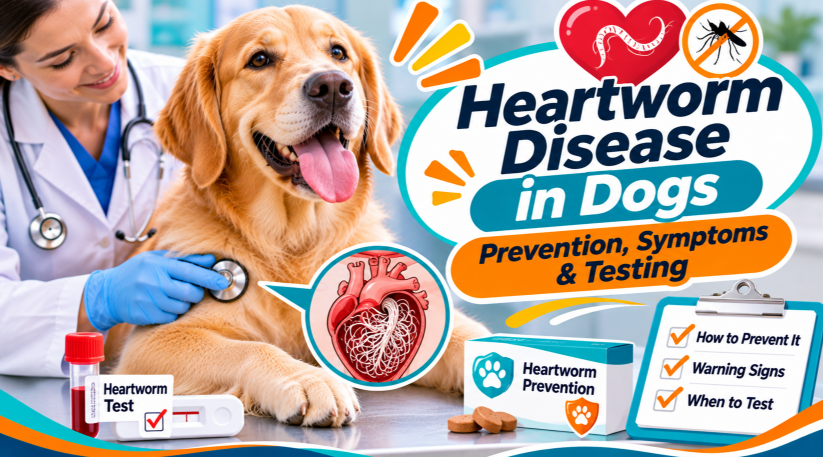
Heartworm disease is a serious condition that can affect a dog's heart, lungs, and surrounding blood vessels. Although it may develop without obvious warning signs during its early stages, the disease can eventually cause significant health problems if it is not detected and managed by a veterinarian.
Unlike some parasites that affect a dog's skin or digestive system, heartworms live inside the body. They are transmitted through mosquito bites, which means dogs can be exposed even when they spend most of their time indoors.
Understanding how heartworm disease develops, recognizing possible symptoms, and maintaining appropriate preventive care are important steps in protecting your dog's health.
In this guide, we will explain how heartworms affect dogs, what warning signs owners should recognize, how veterinarians diagnose the condition, and why regular prevention matters.
1. What Is Heartworm Disease in Dogs?
Heartworm disease is caused by a parasitic worm called Dirofilaria immitis.
When these parasites mature, they can live in the pulmonary arteries and, in more advanced cases, affect the heart and other parts of the circulatory system.
Over time, the presence of adult heartworms can interfere with normal blood flow and cause inflammation and damage to important organs.
Heartworm disease is considered progressive, meaning its effects can become more serious as the infection develops.
According to the American Heartworm Society, early detection and consistent preventive care are important for reducing the risks associated with this condition.
2. How Do Dogs Get Heartworms?
Mosquitoes play an essential role in transmitting heartworm disease.
The infection develops through a life cycle involving infected animals and mosquitoes.
Here is how transmission happens:
- A mosquito bites an animal already carrying heartworm larvae.
- The mosquito takes in microscopic heartworm larvae while feeding.
- The parasites develop inside the mosquito.
- The mosquito bites another susceptible animal and introduces infective larvae.
- The larvae develop inside the dog's body and eventually reach the blood vessels of the lungs and heart.
The development of mature heartworms takes several months.
Importantly, dogs do not normally transmit heartworms directly to other dogs through ordinary contact. An infected mosquito is necessary for transmission.
Because mosquitoes can enter homes and other enclosed spaces, indoor dogs are not completely protected from exposure.
3. Common Symptoms of Heartworm Disease
One challenge with heartworm disease is that infected dogs may appear healthy during the early stages.
As the condition progresses, different symptoms may become noticeable.
Possible warning signs include:
- Persistent coughing.
- Reduced energy during normal activities.
- Difficulty exercising.
- Unusual tiredness.
- Decreased appetite.
- Weight loss.
- Breathing difficulties.
In more advanced cases, dogs may develop signs of heart failure, abdominal swelling, or sudden weakness.
The severity of symptoms depends on several factors, including the number of parasites, duration of infection, and the dog's overall health.
If you notice persistent coughing, unusual fatigue, or breathing problems, arrange a veterinary examination rather than assuming the symptoms are caused by a minor issue.
4. Which Dogs Are at Risk?
Heartworm disease can affect dogs of different ages, sizes, and breeds.
However, exposure risk can vary depending on geographical location and environmental conditions.
Mosquitoes are more active in many warm and humid environments, making prevention particularly important in regions where these insects are common.
Dogs that spend time outdoors may encounter more mosquitoes, but indoor pets can also become infected.
Other factors that influence risk include:
- Local mosquito populations.
- Standing water around the home.
- Previous gaps in preventive care.
- Travel to areas where heartworms are common.
- Inconsistent administration of prescribed preventives.
No dog should be considered completely protected simply because it lives indoors or has not shown symptoms.
5. How Is Heartworm Disease Diagnosed?
Veterinarians use specialized tests to determine whether a dog has a heartworm infection.
A common diagnostic method is a blood test that looks for specific proteins associated with adult female heartworms.
Veterinarians may also perform a microfilaria test to identify immature heartworm stages circulating in the blood.
Depending on the results and the dog's condition, additional examinations may be recommended, including:
Blood work: Helps evaluate general health and identify other possible abnormalities.
Chest X-rays: Can reveal changes involving the lungs and associated blood vessels.
Ultrasound: May help evaluate the heart and detect certain abnormalities in more advanced cases.
The American Heartworm Society's canine guidelines recommend annual heartworm screening for dogs using antigen and microfilaria testing.
Testing schedules may differ for puppies, dogs with missed preventive doses, and animals starting a new prevention program.
A negative test result should also be interpreted by a veterinarian because very recent infections may not yet be detectable.
6. Why Heartworm Prevention Is So Important
Preventing heartworm disease is generally much easier than managing an established infection.
Veterinarians can recommend approved preventive medications based on your dog's age, weight, health, and exposure risk.
Common preventive options include oral and topical medications, as well as certain long-acting veterinary-administered products.
The appropriate option depends on your dog's individual circumstances.
The American Heartworm Society recommends year-round prevention because mosquitoes and transmission risks do not always follow predictable seasonal patterns.
It is important to follow the prescribed schedule carefully.
Never start, stop, or change a preventive medication without consulting your veterinarian.
7. Ways to Reduce Mosquito Exposure Around Your Home
Although preventive medication is essential, reducing mosquito exposure can provide additional protection.
Simple environmental practices can help make your property less attractive to mosquitoes.
Consider these measures:
- Remove standing water from outdoor containers.
- Clean water bowls and outdoor areas regularly.
- Empty unused buckets and plant saucers.
- Maintain screens on windows and doors.
- Keep outdoor resting spaces clean.
- Reduce mosquito breeding opportunities around your property.
You can also ask your veterinarian whether additional mosquito-control measures are appropriate for your dog's environment.
For more information about preventing external parasites, read our guide to Flea and Tick Prevention for Dogs.
8. What Happens if a Dog Tests Positive?
A positive heartworm result requires professional veterinary evaluation.
The veterinarian may recommend additional tests to confirm the diagnosis and determine the extent of the infection.
Treatment decisions depend on the dog's condition, diagnostic findings, and overall health.
Dogs receiving treatment generally require carefully supervised medical management and restricted physical activity.
Exercise restriction is especially important because increased activity can place additional stress on the cardiovascular and respiratory systems.
Owners should follow the veterinary treatment plan closely and attend all recommended follow-up appointments.
Never attempt to treat heartworm disease using preventive products alone or medications intended for another condition.
The Cornell University College of Veterinary Medicine provides additional information about diagnosis, treatment, and recovery.
9. Frequently Asked Questions About Heartworm Disease
Can indoor dogs get heartworm disease?
Yes. Mosquitoes can enter homes, so indoor dogs can still be exposed to infected mosquitoes.
How often should dogs be tested for heartworms?
Annual testing is generally recommended. Dogs starting prevention, missing doses, or changing preventive products may need additional testing.
Can heartworm disease be prevented?
Yes. Veterinarian-prescribed preventive medications and regular screening are important parts of an effective prevention program.
Can heartworm disease be transmitted directly between dogs?
No. Transmission requires an infected mosquito to carry the parasite from one susceptible animal to another.
Can a dog have heartworms without showing symptoms?
Yes. Some infected dogs show few or no obvious symptoms during the early stages, which is why routine screening matters.
Conclusion
Heartworm disease is a serious condition that can affect a dog's cardiovascular and respiratory health. Because mosquitoes transmit the parasite and early infections may not produce noticeable symptoms, prevention and regular veterinary testing are essential.
Understanding the warning signs, reducing mosquito exposure, and maintaining an appropriate preventive schedule can help protect your dog against this potentially dangerous disease.
Remember that every dog has different healthcare needs. Work with your veterinarian to establish a suitable prevention and testing plan based on your pet's age, health, and environment.
Consistent preventive care today can help reduce the risk of serious health problems in the future.
Deja un comentario